
Fast Shipping Door Components: How Atlanta Serves Your Market

Fast shipping isn’t just about logistics; it starts with how and where products are made.
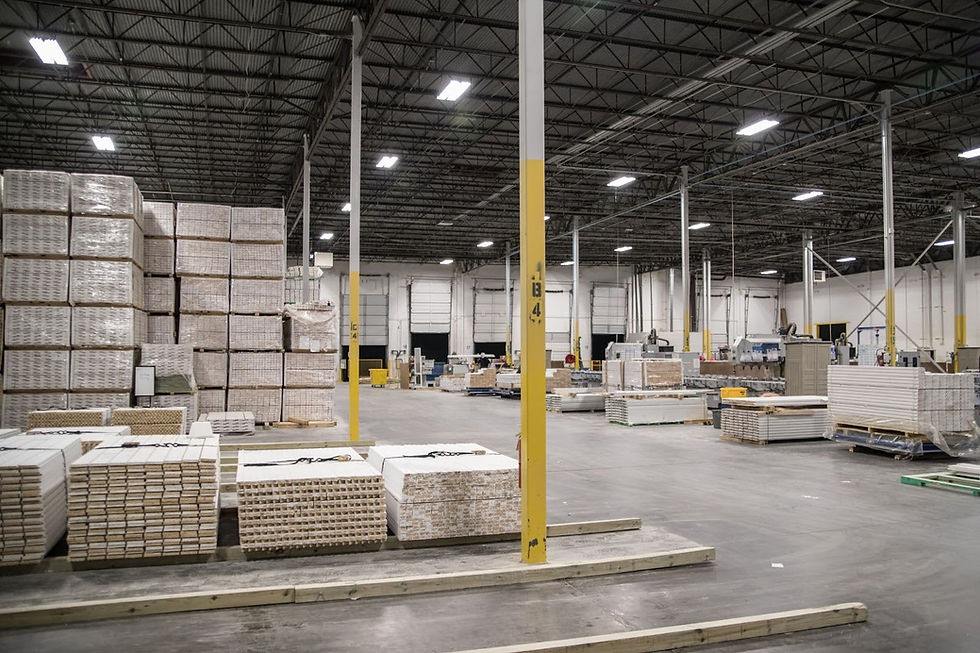
CTI’s Atlanta facility is designed to reduce the time between production and delivery, helping customers keep projects moving without interruption.
Lead Times That Support Real Schedules
With a 21-day lead time, the Atlanta facility supports projects that require quick turnaround across essential categories like door frame components, door thresholds, and door sills.
Shorter lead times allow customers to stay aligned with construction schedules and reduce the risk of delays caused by material availability.
Reducing Complexity in the Supply Chain
Domestic production removes several variables that can slow down delivery. Here's what changes:
Overseas freight = complexity:
40-60 day ocean transit windows (highly unpredictable)
Container consolidation delays
Customs clearance holds
Requires high inventory buffers to absorb delays
Atlanta trucking = simplicity:
3-5 day overland transit (predictable)
Direct-to-distributor delivery (no consolidation)
No customs delays
Enables just-in-time inventory models
For distributors: Less freight uncertainty = more accurate supplier commitments to end customers = fewer margin-killing expedite costs.
This creates a more streamlined process for sourcing millwork, including baseboard and molding, and interior molding and trim, allowing customers to plan with greater confidence.
Inventory That Accelerates Delivery
In addition to production speed, CTI maintains a strong inventory position at our Atlanta facility to support faster fulfillment.
By stocking commonly ordered door frame components and select millwork profiles, we are able to reduce wait times even further, allowing many orders to ship quickly without requiring full production cycles.
This approach provides:
Faster order turnaround for in-demand products
Reduced dependency on production scheduling
Greater flexibility for customers managing tight timelines
Inventory, combined with domestic production, creates a more responsive supply model.
Traditional Model (Import-Based):
Forecast demand 10-12 weeks ahead
Place large orders to amortize ocean freight
Carry 60-90 days of inventory on shelf
High carrying costs, obsolescence risk, tied-up capital
Limited flexibility for demand spikes
Atlanta-Enabled Model:
Forecast demand 3-4 weeks ahead
Place smaller, more frequent orders
Maintain 20-30 days of inventory on shelf
40-50% reduction in inventory carrying costs
Capital freed up for growth, other products, or margin investment
Responsive to demand spikes without backorders
Result: Faster inventory turns + lower working capital needs + more agility to serve end customers.

Keeping Projects Moving
At the end of the day, speed is about more than delivery. It’s about momentum.
When materials arrive on time, in sequence, and ready for installation, projects stay on track. The Atlanta facility supports that outcome by combining production speed with operational reliability.


Comments